Blog
What affects the cost of rewiring? Key factors for Brackley homeowners
What affects the cost of rewiring? Key factors for Brackley homeowners
Rewiring is more than new cables and a tidy consumer unit — it’s about bringing an older electrical installation up to modern safety standards and making the house work for how you live. As a Brackley-based electrician with 16 years’ experience, I’ve seen what adds time and labour to a job. Below I explain the common cost drivers and give practical steps homeowners can take to keep surprises to a minimum.
1. Scope: full, partial or selective rewires
A full rewire (every circuit and cable replaced) is the most labour-intensive option. Selective rewires — replacing only the worst circuits or areas (kitchen, extension, or upstairs sockets) — are quicker and less disruptive, but may be impractical in very old homes. When quoting, I’ll inspect each room and advise whether a selective approach is safe and sensible.
Practical tip: decide whether you want to keep original features (period cornices, picture rails) — matching them later can increase time and care required.
2. Property age and construction
Older Brackley homes — Victorian terraces, 1930s semis or cottages with lath-and-plaster walls — typically hide more problems. Walls that need chasing, lime plaster that’s fragile or timber floors that require access for cables all add labour.
Newer builds usually have easier access (cavity walls, standard plasterboard) so rewires are less intrusive.
3. Access and making-good
Cables run inside walls, under floors and through lofts. If access is straightforward (removable floorboards, accessible loft), the job is quicker. In tight Victorian flats or solid stone walls, more chasing and making-good is required.
Making-good includes plaster repairs, skimming and redecoration. You can reduce the number of trades by agreeing who handles plastering and painting before work starts.
Practical tip: clear loft spaces and move furniture away from walls before the electrician arrives — it speeds up access and keeps costs down.
4. Number of circuits, sockets and new consumer unit
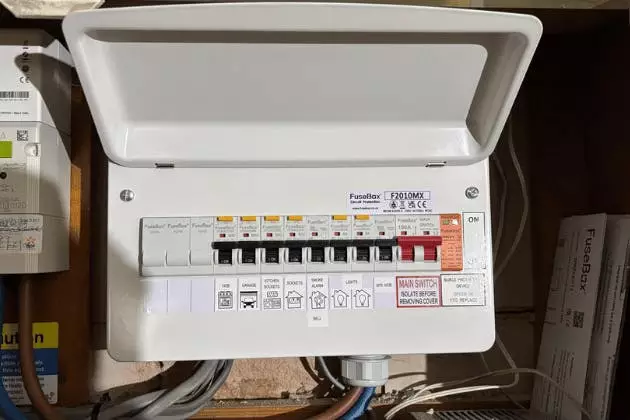
More circuits and outlets mean more cable runs and termination work. Modern kitchens, home offices and EV chargers need dedicated circuits and protective devices (RCDs, RCBOs). Replacing an old fuse box with a modern consumer unit to meet BS 7671 is a common part of a rewire and adds to the scope.
If you want additional sockets, switches or future-proofing (USB outlets, smart switches), mention these during the survey so they’re included in the quote.
5. Additional systems: heating, EVs and garden lighting
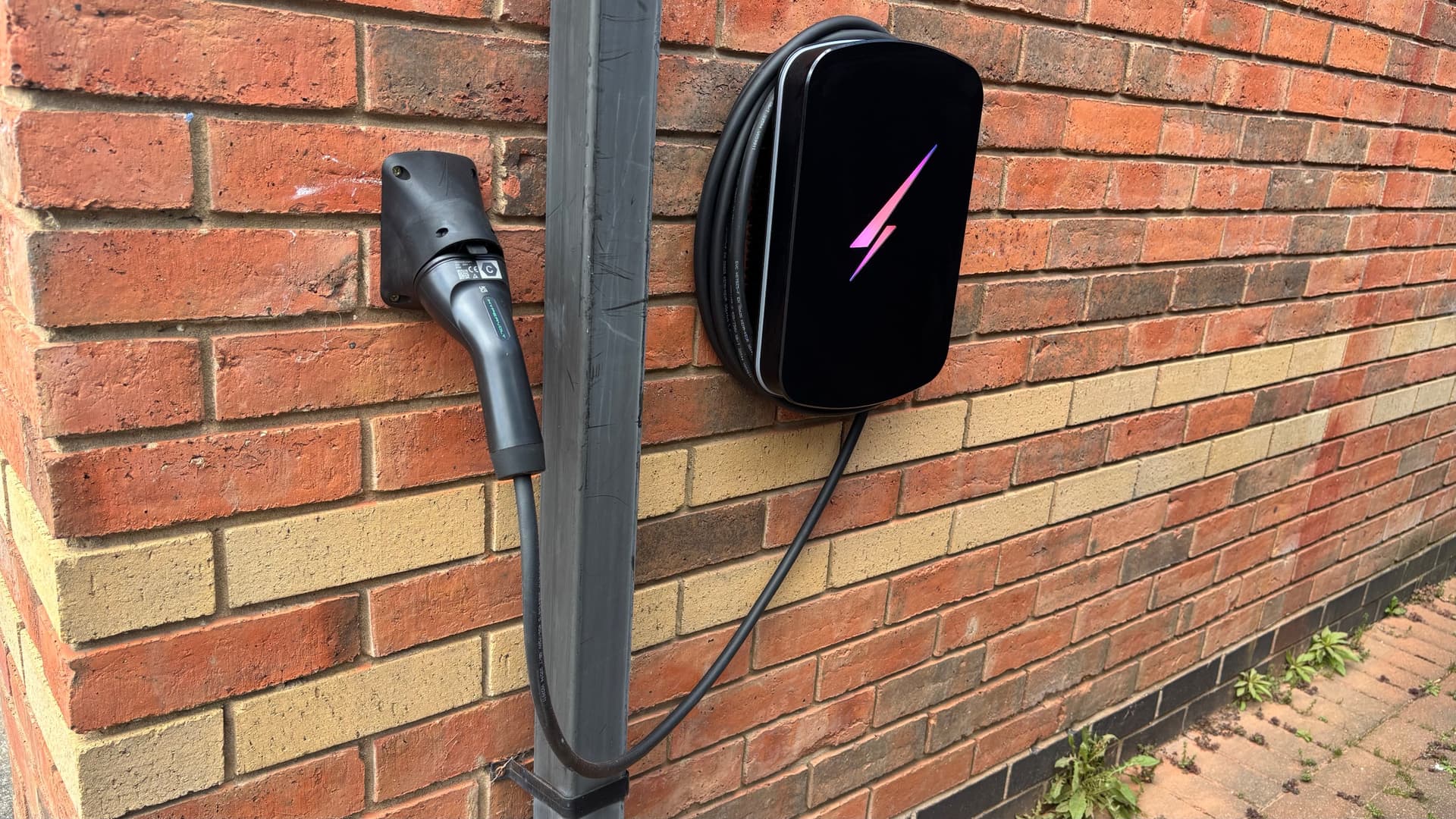
Adding new systems — an EV charger, electric heating, or external lighting to garden and outbuildings — requires dedicated protection and potentially new cabling back to the consumer unit. These are separate circuits and will change the overall job specification.
6. Condition of existing wiring and accessories
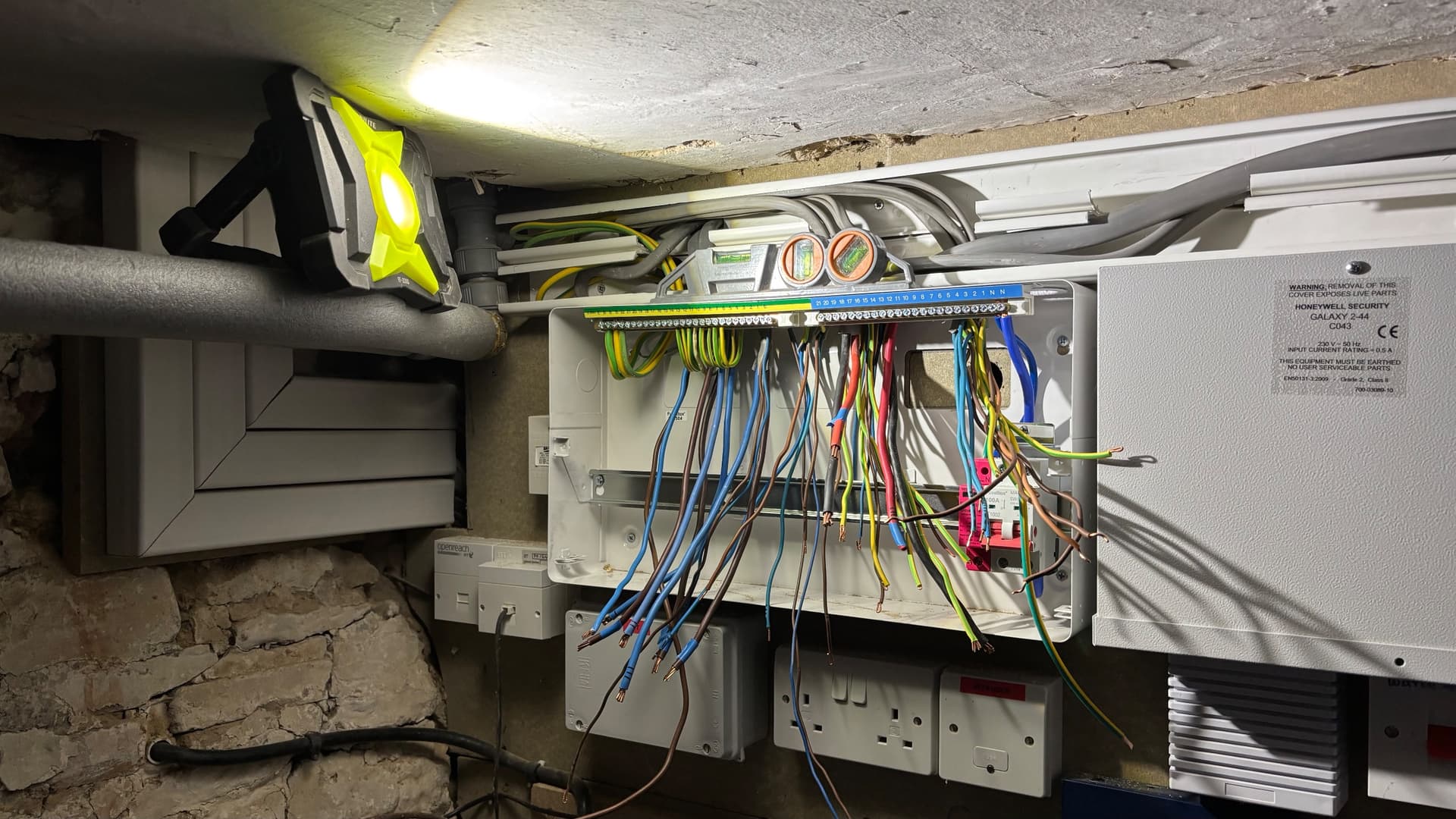
If I find aluminium conductors, degraded insulation or previous DIY work that doesn’t meet current regs, the job can expand. Faulty or unsafe earthing arrangements also require corrective work to meet Part P and BS 7671 standards.
Practical tip: look out for flickering lights, warm sockets or frequent trip faults and tell your electrician — these symptoms help identify problem areas early.
7. Testing, certification and compliance
A rewire always includes testing: continuity, insulation resistance and polarity checks, followed by a full Electrical Installation Certificate or EICR. Notifiable work will be registered with building control via my NAPIT registration and finished to Part P requirements. Thorough testing takes time but is non-negotiable for safety and for insurance/commercial reasons.
8. Labour availability and project timing
When you book matters. Busy periods (spring/summer for garden works or autumn for rewires before winter) can affect lead times. A planned, well-scoped job is more efficient than a rushed emergency job.
How to prepare for a quote — a homeowner checklist
Make a list of problem sockets, rooms to be remodelled and any new appliances (EV charger, new kitchen appliances).
Note plaster finishes or period features you want preserved.
Clear loft spaces and move furniture from room perimeters where possible.
Ask for a written scope that lists what’s included: circuits replaced, consumer unit details, testing and certification, and who handles plastering/decoration.
What you should expect from your electrician
As a NAPIT-registered, NVQ3-qualified electrician working to BS 7671 and Part P, I carry out tidy, documented work with a 12 month workmanship guarantee. I’ll give a clear scope, explain necessary extras and register notifiable work. My approach is personal — I’m on site for every job and I leave the place as tidy as possible.
If you’re in Brackley or nearby (Banbury, Bicester, Buckingham, Towcester), I’ll come and survey your property, explain the likely issues and provide a written quote with timelines and certification included.
For a survey or to discuss your project, call 07769274616 or email phil@luxlectrics.co.uk. Phil Luxford, Luxlectrics — 16 years’ experience, NAPIT registered and backed by 5-star reviews.
Other Articles