Blog
Do You Need a Consumer Unit Upgrade for an EV Charger?

Why the answer depends on your home
Two houses on the same street can need different electrical work before a home EV charger is installed. The deciding factors are not simply the age of the property or whether the consumer unit looks modern. The existing electrical installation, available capacity and protective equipment all matter.
A charger adds a substantial, sustained demand to your home’s electrical system. The electrician needs to consider how that demand fits alongside the circuits already in use, and whether the existing consumer unit can safely accommodate the new circuit and its required protection. An upgrade may be unnecessary in one property, but appropriate in another with a similar-looking board.
How the consumer unit affects the decision
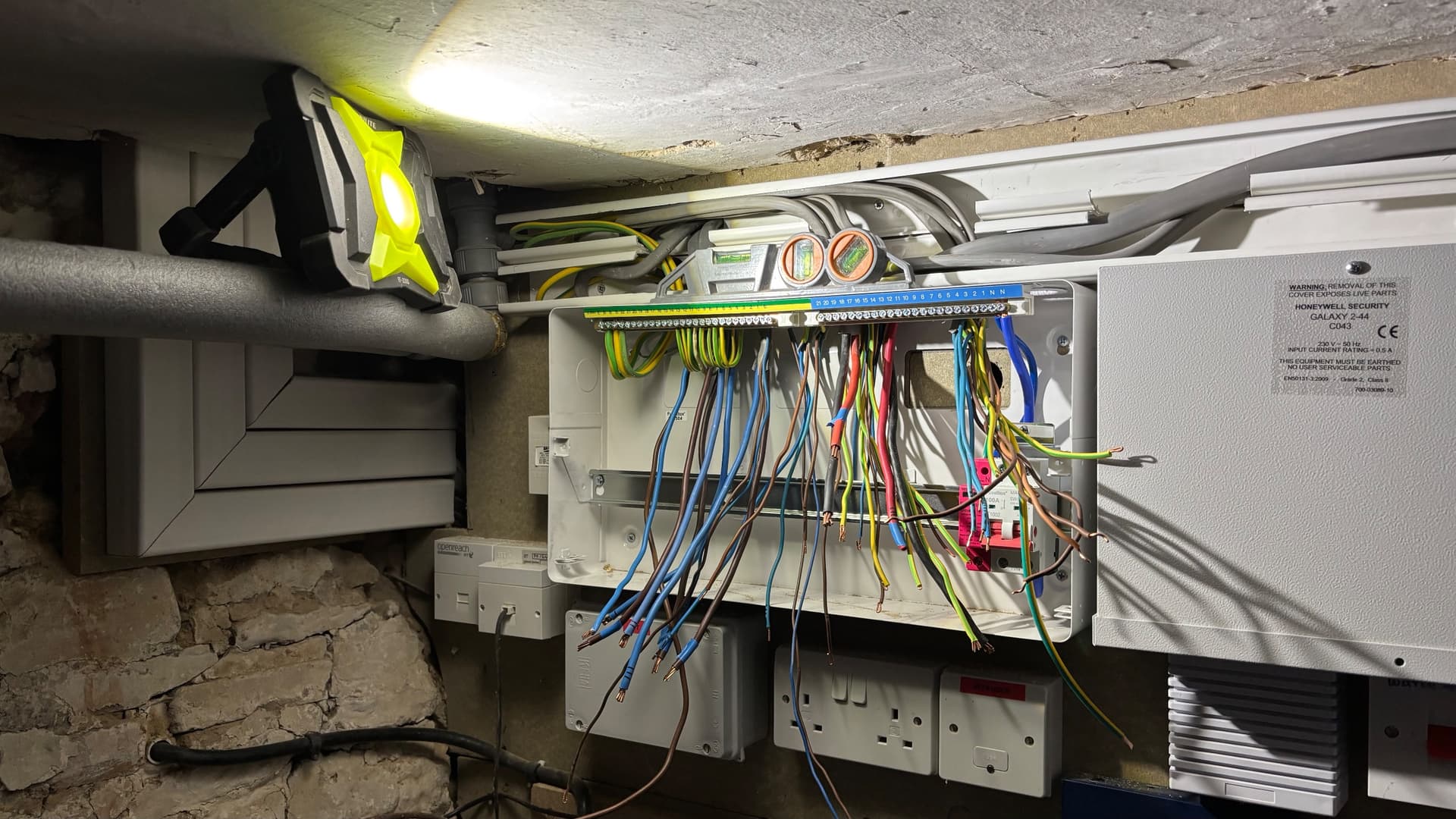
The consumer unit is the central point where circuits are protected and controlled. Its condition and design matter, but a visual check alone cannot confirm whether it is suitable for an EV charger.
One consideration is whether there is a suitable way to connect and protect the charger circuit. An apparently full board may not automatically mean the whole consumer unit must be replaced, and an empty slot does not prove that the installation can support the extra demand. The electrician must consider the board’s arrangement and the protective devices already in place, as well as the condition of the wiring it serves.
The home’s overall electrical demand matters too. A charger could operate alongside other high-demand equipment, so the assessment needs to consider how the property is used, not just what is connected at the time someone looks at the board. If the available capacity is limited, the appropriate solution depends on the supply and installation, rather than a guess based on the consumer unit’s appearance.
Why property type and history matter
In an older home, the consumer unit may be only one part of the picture. Later alterations, extensions or changes to the wiring can mean the installation has been modified in stages. The board might be relatively recent while some circuits are older, or the opposite may be true. The history and condition of the whole installation can therefore be more useful than the property’s age on its own.
In a newer home, a modern-looking consumer unit is not an automatic sign that no work is needed. The available capacity, the board’s configuration and the way the house is occupied still affect the decision. A home with several electrical appliances used at the same time may present a different load picture from one with fewer demands, even if both have similar boards.
Layout can also influence the proposed installation. The distance between the consumer unit, the charger location and the parking space can affect the cable route and the work involved. That does not by itself determine whether the consumer unit needs replacing, but it is part of understanding how the charger will fit into the property’s electrical system.
What points towards an upgrade?
An upgrade is more likely to be considered if the existing consumer unit is in poor condition, cannot provide suitable protection for the new circuit, or does not have an appropriate way to accommodate it. Concerns about the wider installation or the available supply may also need addressing before a charger is connected.
By contrast, a consumer unit that is in suitable condition and has an appropriate arrangement for the charger circuit may be able to remain in place. The important distinction is that “it looks old” and “it needs replacing” are not the same conclusion. Equally, “there is a spare space” is not enough to confirm that the installation is ready.
If you are in Banbury, Brackley or elsewhere in our service area, we can talk through EV charger installation in the context of your home. As a NAPIT registered electrical business, we treat the suitability of the existing installation as part of making a sound decision, rather than assuming every property needs the same solution. Find more about our EV Charger Installation service if you want the overview and other common answers.
What you can note before arranging an assessment
You can safely gather useful background without opening the consumer unit or touching electrical components. Note where the parking space is in relation to the board, whether the property has had extensions or major electrical changes, and what high-demand equipment is regularly used. If you already have paperwork about electrical work, keep it available. These details help explain the property, but they cannot replace an assessment by a qualified electrician.
For homes in and around Banbury, the practical answer comes from the condition and layout of the electrical installation, its protective arrangements and the demand it needs to support. An upgrade should follow from those findings, not from the property’s age alone or a quick look at the board.
Other Articles